Cross-Border Selling on Product Marketplaces
Sellers must master logistics and pricing to convert overseas demand into sales.
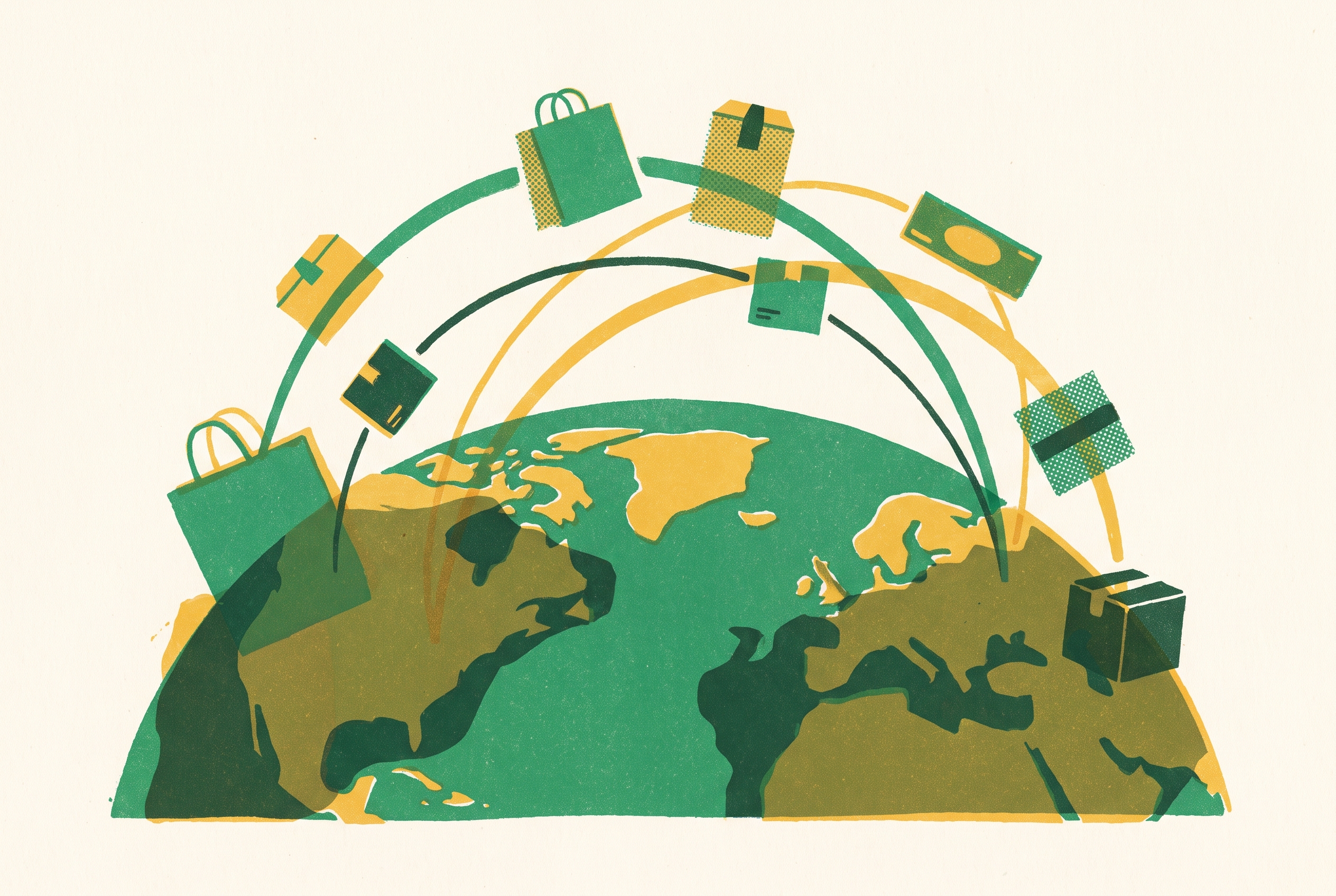
Selling across borders on online marketplaces started as a peripheral experiment, yet it now drives the growth of ecommerce worldwide. This matters because the bar for "winning" as a marketplace seller has moved: it takes more than posting a listing abroad; it takes the operational machinery that turns that listing into sales.
Cross-border marketplace selling as a primary growth channel
Shoppers now favor multi-vendor marketplaces over independent storefronts, pulling cross-border selling along with them. A 2026 marketplace statistics report from CS-Cart highlights integrated logistics alongside AI-powered product discovery as twin engines behind this expansion, while a separate CS-Cart article notes network effects: platforms grow more valuable for every new participant by attracting additional buyers and sellers, thereby pulling in still more of both. National boundaries do not interrupt that loop. Listing an item on a major platform makes it equally visible to overseas shoppers and local ones, so systems designed for home-market traffic naturally absorb cross-border orders too.
The notable shift is that caution has moved. ChannelEngine's 2026 Marketplace Shopping Behavior Report shows cross-border buying is already common among global shoppers, leaving sellers, not buyers, as the more cautious side today. The familiar view of global ecommerce as wary newcomers requiring persuasion to shop abroad no longer fits buyers. Instead, it now applies to sellers, whose decisions on delivery, price-setting, and regulatory obligations have not caught up with shopper intent. Making cross-border listing optional means ignoring demand that is already active.
The conversion gap between demand and execution
Shoppers might be fine with buying from another country, yet completing the order is far from guaranteed. An international offer only turns into a sale when buyers feel secure and recognize the process at the payment stage, something merchants must engineer intentionally.
ChannelEngine's 2026 report frames the core point this way: buying from other countries now belongs to everyday shopping, though shoppers still attach conditions to it. People place overseas orders only when the process seems secure and recognizable, but pull back the instant it does not. What builds that confidence depends on who is shopping. Gen Z shoppers and Millennial buyers lead in cross-border buying, mainly because overseas sites offer products they cannot get nearby. For Boomer shoppers, the sticking points are different: payment options they do not know, return steps that feel murky, and the risk that a dispute with an overseas seller could be hard to resolve.
Age is not the only variable, and region shapes hesitation too. US buyers stand out for steering clear of cross-border marketplace listings entirely, and their stated reasons are concrete: unclear currency, slower delivery, and the hassle of sending a purchase back across a border. Those concrete objections point to a practical takeaway. A localization approach built with one audience in mind rarely works as-is for a different one. A teen buyer ordering from overseas runs into different obstacles than a domestic older buyer, and merchants who lump international checkout trouble into a single issue will not resolve it for either group. Identify the pain points each customer segment actually feels, then design around them so demand becomes completed sales. The discussion then moves through each lever separately: presentation on the product page, checkout cost treatment, disruption-ready logistics, platform selection and oversight, and return expectations set before purchase. Each is addressed separately.
What the research shows about cross-border marketplace growth
Translating a listing for local readers is only the beginning, not the end of the work. A listing that converts needs pricing transparency, payment methods the shopper already trusts, delivery expectations that are clear, and a return policy stated before checkout, not one that only arises when there is a problem. Each element removes another hint of cross-border friction, and it is precisely that sense of unfamiliarity which makes shoppers hesitate.
A solid localization checklist covers product details in the shopper's own language, pricing that lists taxes and duties before checkout instead of catching shoppers off guard, payment options shoppers in the destination country already trust, and delivery timelines with return expectations called out clearly on the listing.
Pricing needs close attention because mistakes here cost money in two ways. Adjusting rates per market to account for exchange rates, tariffs, and regional rivals is essential for international trade, not an optional upgrade added later. Without it, companies either leave margin on the table by playing things too safe or display mismatched figures across marketplace channels so the shopper loses trust. ChannelEngine points to such mismatches as a key spot where the conversion gains from solid localization fall apart.
Trust signals matter here as well. High ratings, proof that the seller is verified, and matching product details from one listing to the next give local buyers the confidence a known home-market brand usually supplies. For an unfamiliar overseas seller, those cues help buyers feel secure about the purchase, and listings that show them make the unknown merchant seem less risky.
Duty and customs handling at checkout determines whether a sale completes or collapses
An unforeseen duty charge will end an international transaction faster than nearly any other obstacle. Shoppers who encounter surprise tariffs during payment or upon delivery are among the most likely to cancel an international purchase. Choosing DDP over DDU determines if an order goes through, making it far too important to leave with a logistics team.
DDP, meaning Delivered Duty Paid, builds duties and taxes into the price upfront, so the shopper sees the total cost at checkout. Because no surprise awaits the buyer down the line, the transaction feels more secure, and merchants on this model see packages turned away at the door less often. DDU (Delivered Duty Unpaid) flips that logic: the courier typically comes knocking at drop-off to collect a duty charge the shopper had no idea was coming. That doorstep demand for money nobody planned on sparks rejections and disputes far more often than all-in pricing does.
Even when a store cannot provide complete DDP, nShift's analysis shows that is no reason for skipping cost clarity. No matter which shipping model a store uses, buyers must understand the amount owed, its timing, and the collector prior to finalizing their order. Accurate documentation is equally vital to the chosen pricing approach, since proper HS (Harmonized System) codes are mandatory for compliance and errors trigger border holdups that undermine any delivery timeline advertised. Guaranteeing a five-day arrival while submitting an incorrect HS code creates a commitment that the supply chain cannot honor.
nShift calls the edge that will define winners in 2026 "invisible logistics" because duties, shipping partners, and international transfers get resolved upstream so shoppers never feel them, leaving just a single price, promise, tracking narrative, and returns route. The rest remains out of sight.
The end of de minimis exemptions in the EU and US has restructured the cost base of cross-border commerce
The economics behind factory-direct international shipping at rock-bottom prices have changed. The US and the EU, the latter from July 2026, have both ended the duty-free thresholds that once let floods of cheap parcels move across borders untaxed, and with that the sector loses a pricing advantage it had counted on for years.
nShift’s 2026 report identifies the EU’s July 2026 move as Europe’s most important customs development affecting ecommerce shipments across borders. A temporary flat-rate levy will take the place of the former exemption on low-value parcels, bringing new costs and paperwork to shipments that had once avoided both. The biggest pressure falls on retailers using factory-to-consumer fulfillment at scale, a thin-margin, high-turnover play that helped budget marketplace rivals expand quickly in recent years. Those sellers gained because these parcels entered duty-free, but that edge has now narrowed.
This shift does not arrive on its own. Route turbulence is making matters worse. Cited by nShift, UN Trade and Development materials show that Red Sea turmoil has lengthened voyages, cut the effective capacity of shipping, and driven operating costs higher on trade lanes worldwide. Even sellers who never handle an ocean container themselves feel the knock-on impact, as squeezed capacity and climbing costs tighten service levels everywhere.
For marketplace sellers, this means the listing's commitments, covering both arrival timing and the final price displayed to buyers, must withstand disruption without falling apart. Such resilience depends on having adaptable shipping options and precise tariff information ready well ahead of dispatch. Merchants whose international finances relied on previous pricing face a stark decision: redesign their framework for current realities or accept shrinking profits that multiply whenever parcels encounter surprise fees or holdups.
Marketplace platform dynamics
Marketplace models are being reshaped by rivalry, with seller economics feeling the impact directly. Any cross-border strategy must weigh reduced fees, added compliance duties, and the strain of running storefronts across several platforms simultaneously.
Facing cheaper competitors, Amazon has rolled out one of its biggest fee restructurings yet for European sellers: FBA fulfilment charges drop by €0.32 per parcel on average in the UK, Spain, Italy, France, and Germany, and referral fees come down for some clothing categories. The change looks like a direct answer to rivals undercutting Amazon on price, and it cuts the baseline cost for sellers who ship through Amazon's logistics arm across those five markets.
That same competitive pressure works against sellers who try to diversify. Sellers caught undercutting Amazon's prices on rival sites face penalties like automated Buy Box demotion or complete removal of their listings, frequently with no prior notice. Merchants spreading across several channels to avoid relying on one hub now face a genuine regulatory hazard, since matching rivals' rates elsewhere may provoke Amazon sanctions that sabotage the entire plan.
Sellers should weigh regional platforms alongside the biggest worldwide marketplaces when choosing sales channels. CS-Cart’s 2026 report highlights Shopee for Southeast Asia, Mercado Libre for Latin America, and Coupang for South Korea, showing where region-first sellers should pay attention. Sellers should build their channel strategy around priority regions, instead of defaulting to the biggest global names out of habit.
Compliance is one more burden that shifts from market to market. In Vietnam, the Law on E-Commerce 2025 took effect on July 1, 2026 and obliges every platform seller there to verify their identity and link tax records, on pain of fines and being delisted. What that rule shows is that regulators in fast-growing Southeast Asian markets are tightening now, and sellers must treat this as a present operational hazard, not something to defer to a later date.
Whether selling on multiple platforms at the same time makes sense has no universal answer. Using several marketplaces reduces dependence on any single platform’s fees or policy moves, since the risk sits in separate systems. But that approach brings added operational burden: sellers must track multiple rule books, align pricing across channels, and, for Amazon, account for rules that can penalize price differences between marketplaces. The argument in favor of using multiple platforms is diversification. The downside is thinner margins plus the ongoing work of staying compliant with several rule systems simultaneously. For sellers, the choice comes down to balancing those competing costs rather than picking an option that is obviously right or wrong.
How a returns strategy builds pre-purchase trust
The real leverage of a returns policy comes while the shopper is still deciding, not afterward. Buyers factor possible return hassle into the purchase decision, and a confusing or strict policy can reduce conversion even when the rest of the listing is fully localized.
A 2026 report from ChannelEngine highlights a key nuance at this point: buyers no longer simply wonder if they will send something back. They're thinking about how hard that return gets when the item must travel internationally. Addressing that distinction demands its own approach. Specifying return deadlines upfront and stating who covers the shipping cost removes buyer doubt early, resolving concerns before they even surface.
Returns, then, reassure shoppers right as they choose whether to buy. Even if a seller clarifies customs, localizes convincingly, and manages logistics disruption effectively, an unclear return policy still leaves shoppers without the final reassurance they need. International sales only work when localization, cost transparency, sturdy logistics, the right platform approach, and a clear returns process line up, since one lingering concern can make a shopper walk away and wipe out the gains from the other four.
Every new piece from marketplace crunch, as it's published.
Follow