Counterfeit and IP Enforcement in Product Marketplaces
Outdated enforcement rules collapse against modern counterfeiting's speed and geographic reach.
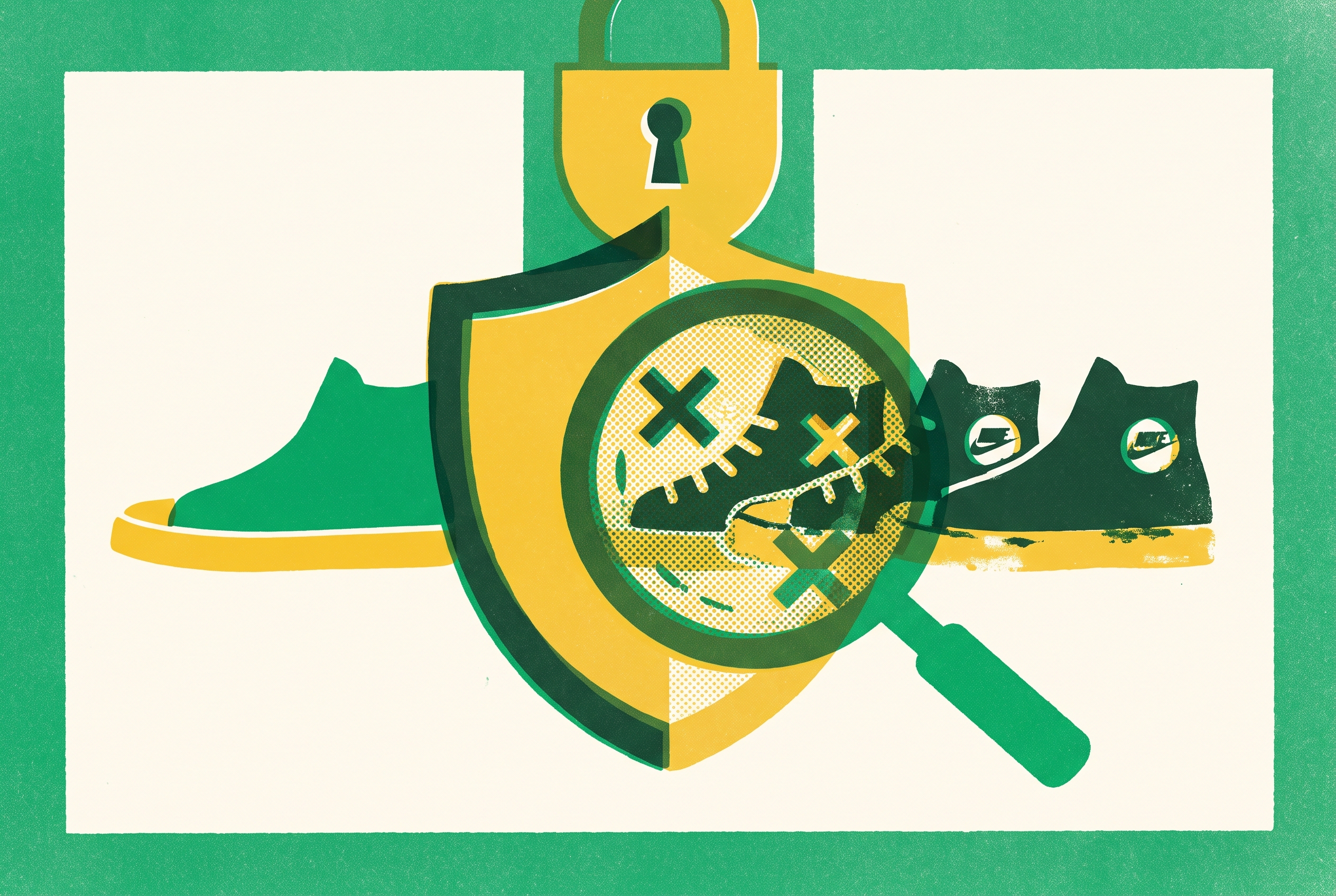
Enforcing IP rights against counterfeits in online marketplaces has moved past simply submitting complaints and anticipating delistings. The previous approach treated each infringement as a fixed target, a single listing on a single platform requiring a single takedown. This framing is outdated, and the following sections explain why enforcement systems designed for that earlier period fail to match how counterfeiting functions today, and how marketplaces, rights holders, and authorities now respond.
Counterfeit enforcement in online marketplaces
This gap is built in: the systems meant to police fakes move too slowly for the way illicit copying works today. Notice-and-takedown rules came from a slower time online, when counterfeit posts lingered so brands could spot them, save the proof, and file a report before another one showed up. That cadence is gone now. Lush encountered over twelve counterfeit shops across Asian e-commerce sites and social networks within one month, hosting hundreds of posts that misused copyrighted imagery. No monitoring team can stay ahead of that many fakes, no matter how diligent they are. Modern counterfeiting flows through interconnected operations rather than lone actors, with one purchase potentially spanning marketing on a single site, payment handled via a separate service, and shipment originating from storage facilities abroad. Every transfer falls under a distinct legal and technical authority, and every transfer is a spot where removing one link in the sequence leaves all other links untouched. This geographic fragmentation of enforcement constitutes the initial challenge.
Cross-border seller networks and the gaps between enforcement jurisdictions
Counterfeiters build their operations around cross-border enforcement gaps, not chance loopholes. Most fake or infringing merchandise stopped at the U.S. border traces back to China and Hong Kong, a pattern that reflects both the region's production scale and the difficulty of reaching factories instead of retail sellers. The USTR's 2025 Notorious Markets List points to 37 web-based and 32 brick-and-mortar markets associated with serious trademark and copyright abuses, identifies China as the main global origin for counterfeit goods, and names Taobao, DHgate, Douyin Shangcheng (Douyin Mall), and Pinduoduo among the online examples. Taobao shows the issue is built into the system, not incidental: in TRACIT's 2025 USTR review submission, brand owners were described as still carrying a heavy monitoring-and-notice burden, with no clear process to bar repeat sellers from returning, and needing to link every complaint to an active listing and submit evidence again even for goods under an existing registered trademark. Because of that rule, prior takedown efforts by the brand are ignored when that counterfeiter posts the item again.
Physical markets aren't a standalone problem relative to digital fakes; they keep that pipeline fed. In 2025, following federal raids that resulted in several arrests, including a principal owner, a judge temporarily closed La Salada in Argentina, a bazaar running for over 30 years; that shutdown was later reversed under strict judicial oversight. Taking out a physical hub removes one node from the network yet leaves the supplier connections that route merchandise toward online marketplaces via alternative pathways entirely intact. U.S. Customs seizures have risen sharply, and that trend reflects greater volume arriving at the border rather than weaker output at the source.
The key takeaway for any brand is that securing intellectual property rights domestically accomplishes very little. Marks must be filed both where products are made and along the shipping routes they travel to reach buyers. The Madrid Protocol streamlines this by allowing a brand to secure trademark protection across multiple jurisdictions with a single application, while the Berne Convention provides parallel coverage for copyright by establishing mutual acknowledgment of rights across signatory nations. Neither agreement takes effect on its own; a brand must still file. Registering a mark at U.S. Customs and Border Protection is one of very few levers that operates before fakes ever reach a consumer: it empowers CBP to seize and destroy, and to detain and forfeit, goods carrying an infringing mark. So sweeping a power at the border is unusual, since nearly every other remedy kicks in only once a purchase is complete. A second built-in weakness lies within each platform itself.
Livestream commerce, platform-hopping, and the limits of existing enforcement models
Livestream selling disrupts enforcement differently from cross-border networks. Even if a fake listing is short-lived, it still leaves some record behind: a page or an image of the product. With a livestream leaves nothing. Vendors use live broadcasts and brief clips on Douyin, TikTok Shop, and TikTok to push fakes as viewers buy immediately, often finishing the transaction before takedown can respond; after the feed ends, its price statements, product descriptions, and account details vanish as well. In its 2025 review, the USTR's Notorious Markets report singles out TikTok as a leading offender in counterfeit trade, precisely because infringing products are so easy to spot in livestreams, in short videos, and on TikTok Shop; Douyin Shangcheng, known as Douyin Mall, appears on that same list. Douyin generally honors takedown notices covering static listings, yet the proactive filters that could flag infringement during livestreams are already available and see uneven use. The technology for monitoring live video is there; what's missing is a steady commitment to using it.
After being removed, sellers often rework licensing details, relaunch under fresh storefronts, and exploit a workaround repeat-offender rules are designed to block but often miss. Moving across platforms deepens the livestream blind spot: someone who finds the item on TikTok may then buy it from a different AliExpress storefront and get it shipped from an address connected to neither platform. Each platform can only take down the fragment it sees, leaving the overall purchase path untouched. Until a purchase is complete, after-the-fact enforcement has no trigger, underscoring why platforms may need obligations that arise before any money is paid. Current enforcement systems still lack a practical response to live commerce, pushing brands and regulators toward earlier intervention tools, including detection technology.
How AI is being used for detection
AI-driven monitoring has changed the scale at which detection is possible, and it has simultaneously armed the people it's meant to catch. Manual review and keyword search cannot identify infringing listings at the pace modern marketplaces generate them, which makes automated tools that scan product images, listing text, seller behavior, and newly posted listings across marketplaces the baseline requirement for any brand with real exposure, not an advanced capability reserved for the largest players. A working deployment is a pipeline of coordinated steps. It starts with an authenticated baseline of a brand's authorized sellers, product titles, EANs and UPCs, and price ranges, then continuously scans marketplaces for deviations from that baseline, classifies each suspicious listing as counterfeit, gray market, or authorized (because the response to each is different), captures structured evidence at the moment of detection, and escalates through a tiered process from there; ScrapeWise's 2026 guide to counterfeit detection describes this architecture in detail.
Spotting fakes at the image level is essential since counterfeiters replicate photos almost perfectly, meaning only visual checks of packaging, logos, and general looks against verified references reveal violations invisible to text queries. The most robust safeguards currently reside within the platforms themselves rather than in external monitoring software. Launched in 2025, Amazon's Brand Catalog Lock empowers rights holders to freeze essential listing elements such as titles, imagery, descriptive bullets, and copy, preventing any unapproved vendor from modifying them after publication. This embeds the solution structurally within the catalog.
AI is helping both sides here. The generative systems and image tools used for automated detection can just as easily help counterfeiters create realistic fake product photos, vary their listings to dodge keyword filters, and scale up while relying on fewer people. Enforcement stumbles at the triage stage: it takes judgment to distinguish a counterfeited item, parallel-market stock, and a lawful reseller, and reporting the reseller for IP infringement by mistake wastes time and creates conflicts the brand could have avoided. No automated system should be allowed to move forward until it has sorted the case correctly. In its 2025 look at IP enforcement, the American Bar Association flags e-commerce trade dress and design-patent violations as especially difficult to address using older policing tools, while adding that marketplace AI monitoring depends on whether platforms care enough to create it. Some answers are physical rather than digital: Pop Mart adds QR codes to real products, directing buyers to a lookup page for anti-fake checks so they can confirm the item is genuine before any fake reaches the brand’s attention.
Current AI detection tools suffer their gravest shortcoming after identifying a counterfeit. To build a court case, one needs chronological records, file provenance, and custody logs, none of which these systems generate on their own. Sellers of fakes typically remove their posts shortly after receiving a takedown demand, taking that proof with them. Unless proof is secured the instant a fake is spotted, no lawsuit will ever follow. This blind spot falls precisely within the scope of data that platforms must legally retain, a matter addressed by the subsequent domain of platform liability law.
Platform liability rules and who bears the cost of enforcement
The law, not circumstance, decides whether policing costs fall on rights holders or on marketplaces, and the rules a platform answers to shape its incentive to hunt fakes before a brand must complain. The U.S. and the EU took different paths, with outcomes now diverging in ways that can be measured.
Under the U.S. DMCA, a platform is shielded from liability as long as it runs a takedown-upon-notice system and removes repeat infringers when identified. Critics have long pointed out the incentive this creates: platforms collect revenue from counterfeit sellers' fees and the traffic they generate, while brand owners carry the entire cost of finding and reporting the infringement themselves. The EU's Digital Services Act sets a higher bar. Platforms must verify trader information under Know Your Business Customer requirements, alert consumers or remove listings suspected of being counterfeit, treat repeat infringers consistently, and give preferential treatment to "trusted flaggers" with expertise in identifying illegal content.
Measurable differences in outcomes have emerged between these two frameworks. AliExpress received the largest DSA penalty to date when the European Commission ruled it failed to properly evaluate or reduce systemic dangers linked to trading counterfeit, unsafe, and illegal products, while also deeming its brand authorization system understaffed and ineffective. By July 2025, regulators preliminarily concluded Temu violated the DSA similarly when undercover shopping tests revealed EU buyers would probably encounter noncompliant items on its platform, noting its risk evaluation relied upon broad sector statistics rather than marketplace-specific proof. Additionally, the Commission and EUIPO entered into a five-year pact to uphold intellectual property rights pursuant to the DSA, targeting digital piracy and counterfeiting, with the agency supplying technical backing to police the biggest platforms. The U.S. lacks any comparable institutional arrangement.
Granting brands instant takedown authority does not make such enforcement inherently secure. Instant removal power pays off only when the wielder polices itself; an overreaching rights holder who flags the wrong item or demands takedown on thin proof invites liability and erodes the marketplace's standing too. This danger has already surfaced on a broad scale. Since Brand Registry entry requires a USPTO registration, scammers have exploited this by fraudulently securing trademarks for marks already in use, then deploying registry tools to eliminate the legitimate seller instead. Amazon has taken the perpetrators of this very scheme to federal court repeatedly. Safeguards meant to shield brands can be weaponized against them, a reality that must inform any candid assessment of where enforcement power should reside.
The enforcement burden for brands
Seeing the system layer by layer does not make the job smaller; it only shows a brand where to begin. The first step is a properly built IP filing program that reaches beyond the home market: trademarks and patents where goods are made, countries they pass through, and key sales markets, copyright filings where they can support a later takedown claim, and customs recordation wherever that is allowed. Those tools, including Berne Convention and Madrid Protocol routes, make cross-border filing more efficient, but they do not represent the brand; applications still must be made in every jurisdiction that matters.
Brands must watch around the clock, even on sites lacking any official footprint, since fakers chase buyer interest rather than sticking to approved channels. Even a company selling exclusively via Amazon must monitor overseas bazaars, storefronts on social networks, and shadowy corners of the internet where knockoffs likely appear, because an empty official catalog on a site hardly guarantees it is free of fakes. This builds on the previously outlined sorting framework: prior to taking action, each questionable offer must be categorized as fake, parallel import, or authorized secondhand sale, since mislabeling a lawful vendor drains effort and risks provoking a pointless conflict.
Registration, classification, monitoring, capturing evidence, and escalating to platforms each depend on the others, so no step may be dropped simply because another exists. Even when trademarks are on file at customs, skipping ongoing surveillance means the most important listings go unnoticed. Robust identification means little without rigorous proof gathering, leaving fakes that courts will never touch. Every challenge examined here, from cross-border gaps and the livestream blind spot to the AI detection pipeline and how platforms share responsibility, demands an unbroken cycle where each layer covers what the rest cannot.
Notes
- 2025 Review of Notorious Markets for Counterfeiting and Piracy
Provided the specific figures and named platforms from the USTR's 2025 Notorious Markets List, including the 37 web-based and 32 brick-and-mortar markets and the identification of TikTok, Taobao, DHgate, and Douyin Mall.
- Counterfeit Detection Tools 2026: E-commerce Brand Protection
Described the AI detection pipeline architecture including baseline authentication, continuous scanning, classification of listings, and evidence capture.
- IP Enforcement Developments Businesses Should Know About
Sourced the ABA's 2025 observations on trade dress and design-patent enforcement difficulties and the dependence of AI monitoring on platform willingness.
Every new piece from marketplace crunch, as it's published.
Follow