B2B Procurement Marketplaces Disrupting Traditional Supply Chains
Middlemen lose pricing power as marketplaces expose costs and connect buyers directly to suppliers.
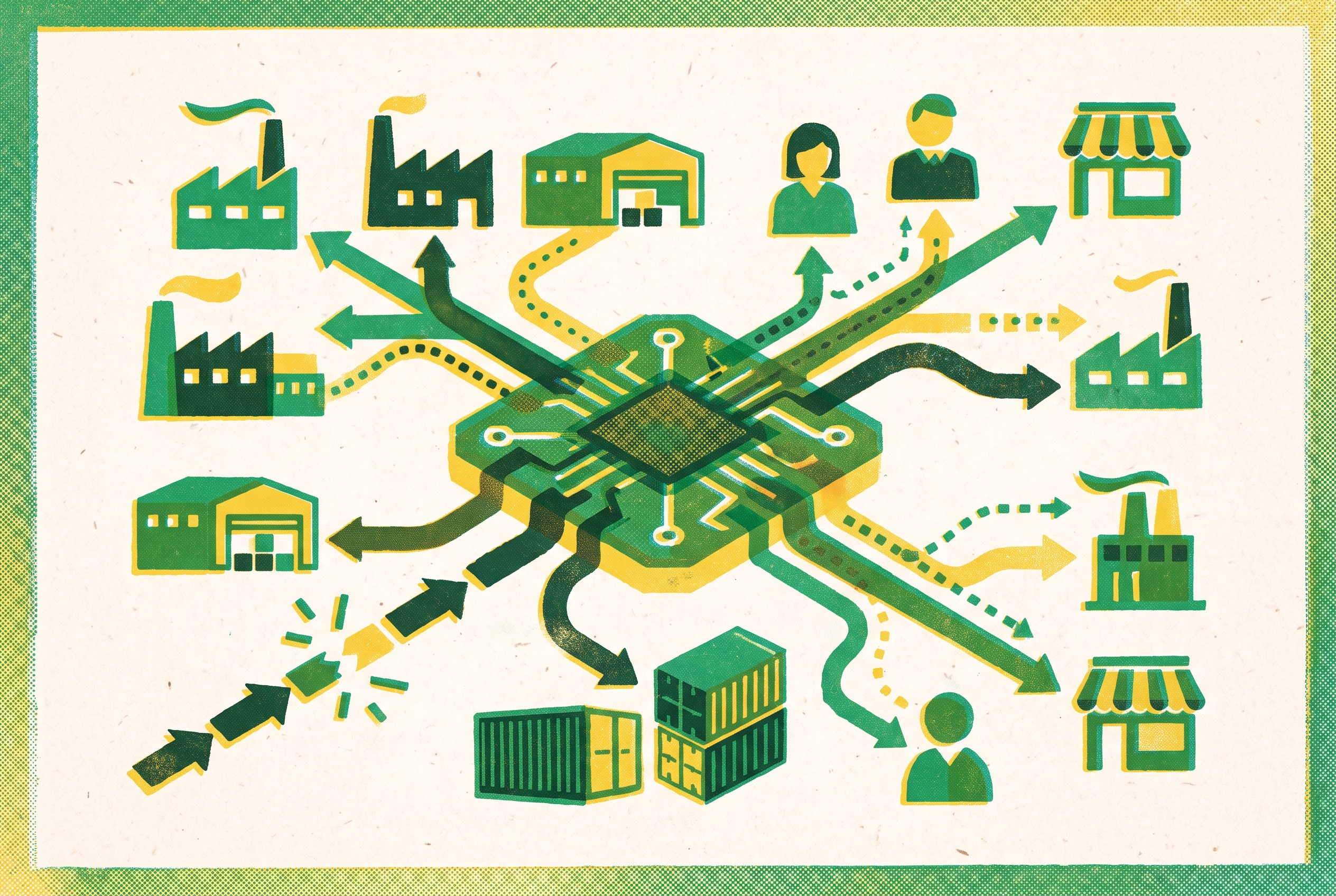
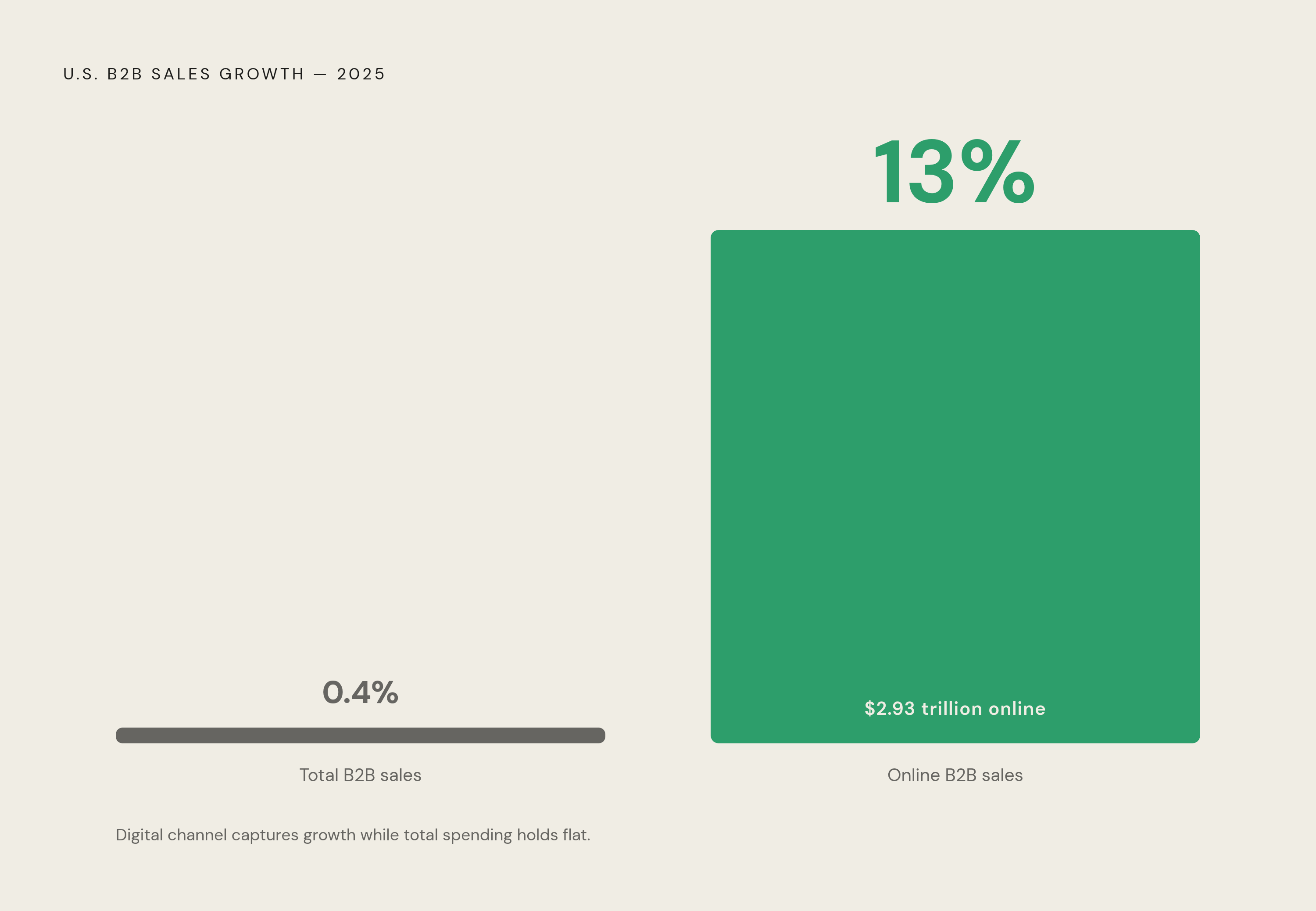
In 2025, overall U.S. B2B sales barely moved, up just 0.4%, while online B2B sales within that total shot up 13% to $2.93 trillion. Buyers aren't increasing their spending. The same money is now moving through fewer, clearer channels, and that shift is what this is really about. The software isn't the point. What's really going on is that middlemen are being pushed out, and plenty of them still won't admit it.
Forecasts suggested that 80% of B2B sales interactions would occur in digital channels by 2025. Procurement teams aren't waiting for some big shift to hit them. They're already in the thick of one, and many are still working out what shifted beneath them. What went wrong, then, and what's taking its place? The rest of this piece answers that question, section by section.
How traditional supply chains were built around friction and what that cost buyers
B2B buying used to follow a path from wholesaler to distributor to broker to buyer, with everyone grabbing a fee and slowing things down. Every handoff meant another markup and a few more days of fog, because nobody downstream could see what the guy two steps up actually paid.
The systems weren't connected, either. A buyer might find a supplier on one platform, place the order through a separate portal, track the shipment in a third system, then pay via a fourth. Every step required its own login, with phone calls or emails filling in the gaps. PYMNTS put it simply: broken B2B systems add friction "at every step, from product discovery to order fulfillment." This isn't just about bad software. It describes a setup never meant to run efficiently, because efficiency wasn't the goal. Control of the relationship was.
Pricing ran on the same model: hashed out buyer by buyer, supplier by supplier, call by call, and buyers could only pick from suppliers already in their network. Nobody could check whether a better price sat three suppliers over. Studies of sourcing through Chinese intermediary trading companies found buyers often paid much more than factory-direct pricing, and the same pattern appears in other sourcing corridors too, not just that one.
None of this got tolerated because buyers enjoyed it. Buyers put up with it because bypassing the established relationship felt riskier than paying the markup. The math that made that trade-off make sense is failing right now, and the next section explains what's doing it.
What disintermediation actually means when a marketplace replaces the middleman
Gartner's 80% figure no longer looks like a forecast. It reads more like a receipt. In B2B buying, disintermediation means a marketplace takes over the exact tasks middlemen used to handle, especially three of them.
Supplier vetting and qualification, once handled by a distributor who'd known a factory owner for fifteen years, now runs on platform-level checks and buyer reviews. Payments and financing, like trade credit, currency conversion, and invoicing, are now part of checkout itself instead of handled by a broker working out terms manually. The marketplace handles shipping, picking carriers, tracking, and routing orders itself rather than leaving it to a freight forwarder on the phone.
Pressure is coming from both sides at once. Makers now sell straight to businesses, cutting out distributors, and online marketplaces use their size and shipping networks to take the business regional middlemen once got automatically. A large share of B2B decision-makers now approve purchases without any human contact. So more than half of buying calls get made with no salesperson present at all, and that's grim news for anyone still carrying the title "account manager."
Account managers staking their careers purely on relationship value are now the most exposed. Humans now handle only the hard parts: big contracts, new categories without automated workflows yet, and calls where judgment matters. Everything else is being quietly automated away from the people who used to control it, and many haven't noticed the handoff already happened.
Price transparency as a supply chain force: what happens when every buyer can see the market
Not knowing prices was just how things worked. Every deal had its own price, and buyers had nothing to compare against except their own past orders from that supplier. No comparison shopping, because there was nothing to compare against.
Marketplaces flipped that switch. One search shows prices, stock levels, and rival bids from different sellers. Sixty percent of B2B buyers now treat real-time inventory visibility and order tracking as standard, not as a premium feature for vendors to brag about.
Procurement teams stop managing sourcing as a relationship and start reading it as a dataset. Category spend analysis, benchmarking, and negotiating with real comparables instead of gut feel only work once supplier prices are visible and standardized. A large share of buyers want to buy on their own, which only works when prices are already public. You can't self-serve a price you can't see.
Suppliers get hit with the flip side, and it isn't gentle. Generic commodity products face price pressure almost at once when a buyer can view five vendors on one screen. Margins must now come from reliability, service, or faster fulfillment, as prices keep falling toward the lowest charge from a verified supplier. Platforms adding analytics on buying patterns and supplier performance push this even further. When a buyer shows up to negotiate with past price records instead of a gut feeling, the seller's day gets a lot harder.
On-demand supplier access and what it does to supply chain resilience
Traditional supply chains had the same kind of resilience as a Rolodex: strong on a handful of contacts, thin everywhere else. They had backup suppliers, sure, but backups meant familiar names only, and getting a new one qualified could take considerable time.
Marketplaces make it almost real time. With many pre-vetted suppliers, changing sourcing isn't a quarter-long project anymore. It's a decision made over lunch. Per its 2025 procurement barometer, Origami Marketplace dubbed the one-stop-shop model the "Holy Grail for purchasing departments," and the label fits. Aggregation like that couldn't happen before marketplaces reached this scale.
Multi-sourcing, once optional, became standard practice after the pandemic changed how everyone saw single points of failure. This isn't emergency planning now, it's just how you operate, and if you're still using one supplier for a category in 2026, you're gambling on your own. That bet usually fails quietly, as a six-week lead time nobody planned for, not in some dramatic way anyone sees until the shipment never arrives. ClickPost puts real numbers on the scale question: more than 7 million registered suppliers and 150 million registered buyers as of 2025, a network no single company could replicate with ten years of cold calls.
Origami's barometer cast the shift almost architecturally: the marketplace "is no longer just a sales channel, it is the nervous system that ensures the resilience of the supply chain." A bit dramatic, maybe, but not wrong. Sticking with one supplier isn't playing it safe. They just take longer to see the floor shifted.
Where vertical and horizontal platforms diverge and why the distinction matters for procurement teams
Most procurement teams mess up by choosing one, acting like horizontal and vertical platforms do the same work. They don't, and when teams treat the two as interchangeable, they wind up buying custom-machined parts on a marketplace made for office chairs and staples.
Amazon Business and Alibaba.com span many categories and deep supplier lists, making them fit low-dollar, high-frequency buys nobody wants to spend a week sourcing, but not anything needing real specification depth. Amazon Business has more than 5 million business customers worldwide and is set to handle about $83 billion in 2025, according to Capital One Shopping research. Through Coupa Advantage, it gives shared customers discounts like 50% off the first 12 months of Prime Business plans in the US, Canada, France, Italy, Germany, Spain, and the UK. Its SAP Ariba Punch-in integration, available to select shared U.S. customers and rolling out to all U.S. customers by June 2025, lets buyers browse Amazon Business and complete checkout within SAP Ariba, so purchases stay inside compliance workflows instead of outside them.
Vertical platforms focus deep rather than wide, with tighter supplier checks and workflows shaped by one industry's real quirks. Xometry (NASDAQ: XMTR), an AI-driven marketplace for custom parts (CNC machining, 3D printing, injection molding), reported $630 million in 2025 marketplace revenue, a 30% jump year-over-year, plus Q4 2025 revenue of $192 million, also up 30%. Xometry bought Thomas (Thomasnet.com), linking industrial buyers to over 500,000 commercial and industrial sellers. That’s what depth gives a buyer: a quoting engine that knows tolerances and lead times for a five-axis mill, not a keyword-matching search bar.
Procore links material orders straight to construction project schedules, reducing the on-site delays that happen when lumber arrives two weeks after the framing crew. AgVend says it covers over 25% of North America's agriculture input retail market, rolled out an AI copilot named Goose for agronomists, grain merchandisers, and energy sales reps, and teamed with Bayer's seed and agribusiness division. cargo.one operates an AI-native system for air and ocean freight rate management and booking, and United Cargo joined it in late 2024. Boeing Global Services has a B2B marketplace for parts and repairs, while Siemens built one to link its suppliers and customers for buying and maintenance.
Horizontal platforms tidy up tail spend and tighten compliance. Vertical platforms manage spec-heavy categories that horizontal players just can't handle well. Treating these as mutually exclusive means missing out, since the approaches that really work stack them together: a single broad platform for commodity spend, plus a few vertical ones where domain expertise and supplier qualification truly count.
How procurement management platforms plug into marketplaces to close the compliance gap
Simple purchasing leads to its own problems. If people can buy from a marketplace in three clicks, some of those orders skip the rules completely, and untracked spending builds up where finance won't notice it.
Procurement management platforms sit above the marketplace layer to close that gap. Both Coupa and SAP Ariba plug into Amazon Business to apply approval routing, budget limits, and spend analytics to whatever is purchased. Coupa operates a spend management platform that connects with more than 35 ERP systems. SAP Ariba runs source-to-pay apps and slots most naturally into SAP's wider ecosystem, which can be either a plus or a lock-in issue depending on what system a company already uses.
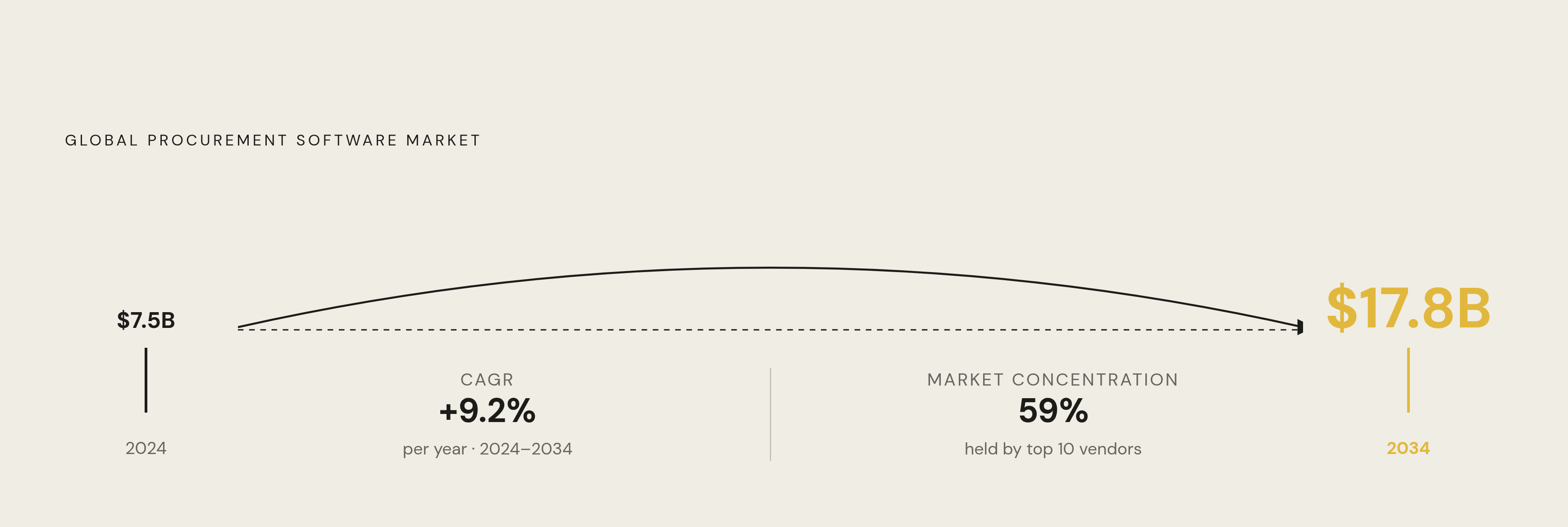
About 59% of the procurement software market belongs to just 10 vendors, so they decide which integrations happen and which ones don't. The global procurement software market was worth $7.5 billion in 2024 and is projected to reach $17.8 billion by 2034, a 9.2% compound annual growth rate.
Bypass the integrated platform and purchase directly on a marketplace, and everything seems fine until an auditor reviews twelve months of spend data and uncovers three departments buying the same item from three different vendors at three different prices. Bypassing the existing setup doesn't cause a scandal, just a slow drain that shows up in a report no one wanted to write. A marketplace linked to a company’s existing spend management platform keeps its compliance and analytics work intact. Buying outside that connection is a liability waiting to go off, and the same rules apply to how procurement teams handle internal know-how, since supplier evaluation notes, buying guides, and vendor research stay in better shape in one place than scattered across old emails and slide decks no one can locate months later.
The CSR and regulatory layer that is quietly restructuring supplier qualification
Europe's CSRD rules are making procurement teams gather data, mostly by mistake. Tracking scope 3 emissions, documenting labor conditions, tracing materials: procurement never handled any of that before. Now it is.
Chasing CSR certificates and emissions numbers from thousands of suppliers one email at a time through spreadsheets has hit a wall. It can’t scale, and acting like it can is a mistake an audit catches two years too late. Centralized marketplaces are fixing this by making suppliers submit CSR certificates the same way and scoring them consistently, something a scattered, one-deal-at-a-time setup never could.
A growing share of big firms would change suppliers if data traceability isn't assured. It's now a requirement, not an optional extra on a scorecard. France's Conseil National des Achats and AgileBuyer put supplier risk management and CSR on the same level as cost reduction as lasting priorities for purchasing directors, a sign of how far this has shifted from a compliance checkbox to a core sourcing criterion.
Circularity matters here too. Per the Origami barometer, marketplaces now show new and refurbished items together on one screen, hitting an ESG target while helping buyers cope with inflation. ADEME calls extending equipment lifespan the most effective way to cut carbon footprint, so refurbished-goods integration is becoming inevitable rather than trendy. Marketplaces lacking CSR data collection and supplier sustainability scoring will be quietly cut from enterprise procurement programs as these rules keep tightening, and most vendors still underestimate that part.
What AI is doing inside the marketplace layer beyond basic search and matching
AI in procurement marketplaces isn't just better catalog search, and seeing it that way misses what has really changed. Xometry's quoting engine reads a buyer's part specs and comes back with pricing, lead times, and manufacturability feedback inside the order flow, cutting a multi-day RFQ process down to something like minutes. What once meant three days of back-and-forth for a quote now arrives before the buyer's coffee cools. That's what matters here, not the loose tag of "AI-powered sourcing" attached to it.
With AgVend's Goose copilot, agronomists and grain merchandisers can ask about buying history and write supplier messages in plain language, no spreadsheet digging required. That puts procurement intelligence in the daily workflow, not off to the side as a separate reporting tool. AI-driven demand forecasting takes the same approach, reviewing marketplace transaction data to spot buying patterns and catch shortfalls before they hit the receiving dock.
Coupa's self-running AI agents now route approvals, check policy rules, and flag oddities, work that once required someone watching every transaction. With nearly 61% of U.S. procurement managers reporting better efficiency from AI-driven vendor selection, the productivity case is no longer theoretical.
AI is shifting from supporting a procurement manager's decisions to being a layer that simply carries them out. The manager stops handling the sourcing workflow by hand and starts setting AI’s guardrails, either a relief or a demotion depending on how much anyone actually liked running RFQs by hand.
The regional geography of this disruption and where the fastest structural change is happening
Location plays a bigger role than most procurement talks admit. Asia-Pacific holds 69.23% of global B2B e-commerce revenue in 2025, the biggest share of any region by transaction volume. It works through the same mechanics outlined earlier: dense supplier networks like IndiaMART's, giant manufacturing marketplaces such as Alibaba.com, and regional buyers who embraced digital far earlier than many in the West.
That's the biggest piece of it, but not the whole map. The forces behind disintermediation, transparency, on-demand access, CSR-driven qualification, and AI-native execution don't stay within one region or platform type. Because they're structural, procurement teams everywhere are already inside this shift, not still deciding whether to join it.
Notes
- 2025 procurement barometer: digitalisation, CSR and marketplaces
Provided the 2025 procurement barometer data cited for the 'Holy Grail' one-stop-shop label, the circularity/refurbished goods finding, and the ADEME carbon footprint claim.
- Digital B2B Marketplaces Are Cutting Out Middlemen While Reshaping Procurement | PYMNTS.com
Provided the quoted description of broken B2B systems adding friction at every step from product discovery to order fulfillment.
- https://www.gminsights.com/industry-analysis/procurement-software-market
Supplied the procurement software market size figures: $7.5 billion in 2024, projected $17.8 billion by 2034, at a 9.2% CAGR.
- https://www.clickpost.ai/blog/b2b-marketplaces
Provided the 80% digital sales interaction forecast, the 7 million supplier and 150 million buyer figures, and the Amazon Business 5 million business customers statistic.
Every new piece from marketplace crunch, as it's published.
Follow